Oil Prices Rise as US-Iran Peace Hopes Fade
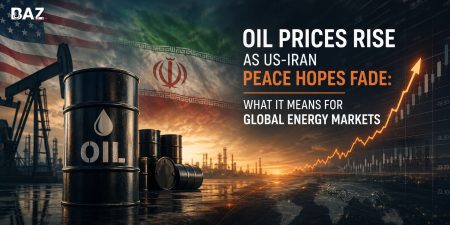
Global oil prices climbed on Tuesday as hopes for a lasting peace agreement between the United States and Iran weakened, raising concerns about renewed conflict and disruptions to one of the world’s most important energy routes.
Brent crude oil rose to around $91.14 per barrel, while US WTI crude oil climbed to approximately $85.04 per barrel, reaching its highest level since late July.
The latest increase comes as markets reassess the possibility of renewed fighting between Washington and Tehran following the expiration of a 60-day interim agreement. With negotiations showing little progress and uncertainty surrounding the reopening of the Strait of Hormuz, traders are increasingly pricing a higher risk premium into crude oil.
Why Are Oil Prices Rising Today?
The main reason behind the latest rise in oil prices is growing uncertainty over the future of the US-Iran ceasefire and the potential impact on global energy supplies.
A senior Iranian official told Reuters that Tehran could adopt a “fully offensive” military posture after negotiations for a permanent end to the conflict stalled. At the same time, US President Donald Trump has indicated that Washington is not seeking to extend the interim agreement.
The combination of stalled diplomacy, rising military tensions and uncertainty over the Strait of Hormuz has created fresh concerns among oil traders.
Markets typically react strongly to geopolitical risks because even the possibility of supply disruption can push crude prices higher.
Strait of Hormuz Becomes the Biggest Oil Market Concern
The Strait of Hormuz is at the center of the current oil market uncertainty.
The narrow waterway connecting the Persian Gulf with the Gulf of Oman is one of the world’s most strategically important energy corridors. A significant share of global oil shipments passes through the strait, meaning any prolonged disruption could have major consequences for international energy markets.
If tanker traffic is restricted or the route remains closed, oil exporters in the Gulf could face difficulties transporting crude to international markets.
That creates a simple market equation: less available supply + strong global demand = higher oil prices.
The possibility of renewed attacks, restrictions on shipping or a prolonged closure of Hormuz could therefore push Brent crude oil prices significantly higher.
Oil Prices Have Already Surged During the Conflict
The latest move above $90 per barrel comes after oil prices experienced a much larger spike earlier in the conflict.
Crude oil reportedly reached levels close to $126 per barrel at the peak of the crisis before retreating as markets responded to hopes of a ceasefire and improved diplomatic conditions.
The decline from those highs demonstrated how quickly geopolitical risk can disappear from or return to the oil market.
Now, with hopes for a permanent agreement fading, traders are once again adding a geopolitical “war premium” to crude prices.
The key question for markets is no longer simply whether fighting resumes, but how long any potential disruption to energy infrastructure and shipping routes could last.
What Happens If the Strait of Hormuz Remains Closed?
A prolonged disruption in the Strait of Hormuz could have consequences far beyond the Middle East.
Higher transportation costs, tighter crude supplies and increased competition for alternative sources of oil could push global energy prices higher.
Refineries and importing countries would also have to compete for available supplies, potentially increasing the cost of gasoline, diesel, jet fuel and other petroleum products.
Higher oil prices can eventually filter through to the wider economy because petroleum is used across transportation, manufacturing, agriculture and logistics.
This means that a geopolitical crisis in the Gulf can ultimately affect consumers thousands of miles away.
What Could Higher Oil Prices Mean for Pakistan?
Pakistan could be particularly sensitive to another sustained increase in global oil prices because the country relies heavily on imported petroleum products and crude oil to meet domestic energy requirements.
If international crude prices remain elevated, Pakistan’s import bill could rise, putting additional pressure on the country’s foreign exchange requirements and current account.
Higher international oil prices can also increase domestic fuel costs, depending on government pricing decisions, taxes, exchange-rate movements and other factors.
For consumers, more expensive fuel can raise transportation costs. Businesses may also face higher expenses for logistics, electricity generation and production, potentially contributing to broader inflationary pressure.
For Pakistan’s economy, therefore, the direction of crude oil prices remains an important factor to watch.
What Could Happen to Oil Prices Next?
The short-term outlook for oil prices will largely depend on developments between the United States and Iran.
If diplomatic negotiations resume and the Strait of Hormuz reopens fully, some of the geopolitical premium could disappear from crude prices.
However, renewed military action, prolonged restrictions on shipping or attacks affecting oil infrastructure could send prices substantially higher.
Traders will closely monitor developments surrounding the US-Iran conflict, tanker traffic through Hormuz, production levels from major oil exporters and global inventories.
The market is therefore entering another period of heightened uncertainty.
Conclusion: Oil Market Faces Fresh Geopolitical Risk
The latest rise in oil prices highlights how closely global energy markets remain tied to geopolitical developments.
With the US-Iran peace process facing setbacks and uncertainty surrounding the Strait of Hormuz, concerns about oil supply disruption are once again influencing crude prices.
Brent crude has moved above $90 per barrel, while WTI has also strengthened. Whether prices continue higher will depend largely on whether diplomacy can prevent another escalation.
For major oil-importing economies such as Pakistan, the stakes are particularly high. A prolonged period of expensive crude could increase import costs, fuel prices and inflationary pressures.
For now, the biggest factor driving the oil market is uncertainty and until there is greater clarity over US-Iran relations and the future of the Strait of Hormuz, volatility is likely to remain a major feature of global crude oil prices.