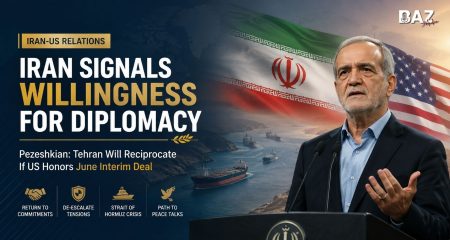
Iranian President Masoud Pezeshkian has signaled that Tehran remains open to diplomacy with Washington, declaring that Iran will immediately reciprocate if the United States returns to its commitments under the interim agreement reached in June.
Speaking at the Shanghai Cooperation Organisation (SCO) summit in Bishkek, Kyrgyzstan, on Tuesday, Pezeshkian delivered one of Tehran’s clearest indications yet that a diplomatic path remains possible despite renewed military tensions between Iran and the United States.
However, Iran’s offer comes with a clear condition: Washington must first honor its commitments under the June framework.
The latest statement has placed the Iran-US interim deal back at the center of international attention, particularly as concerns grow over the escalating conflict, the closure of the Strait of Hormuz, and the potential consequences for global energy markets.
Pezeshkian Says Iran Will Immediately Reciprocate
President Masoud Pezeshkian stated that Iran was prepared to take reciprocal action if the United States returned to the commitments outlined in the earlier memorandum of understanding.
According to Pezeshkian, the Islamic Republic is not rejecting negotiations. Instead, Tehran believes that diplomacy can only move forward if both sides respect the agreements they have already made.
His message was direct: if Washington fulfills its obligations, Iran is ready to respond immediately with corresponding measures.
The Iranian president accused the United States of failing to uphold the June 17 framework. He argued that the agreement survived for less than two weeks before disagreements over implementation and what Tehran described as excessive American demands caused the arrangement to collapse.
This has become a central issue in the current Iran-US relations crisis. While both sides have expressed interest in reducing tensions at different points, deep mistrust continues to complicate efforts to establish a lasting ceasefire or peace agreement.
June Interim Deal and the Collapse of Peace Talks
The June interim agreement was designed to create a framework for ending the conflict that began after US and Israeli strikes against Iran on February 28.
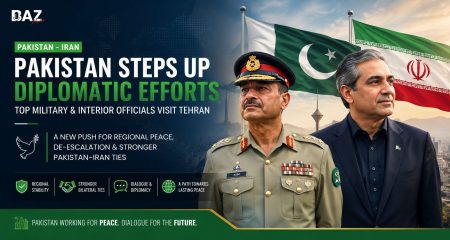
The agreement was expected to reduce military confrontation and establish conditions for further negotiations between Tehran and Washington. Pakistan was also involved in diplomatic efforts surrounding the broader peace process, highlighting Islamabad’s growing role as a potential mediator in regional security issues.
However, disagreements over implementation quickly undermined the framework.
Iran argues that Washington failed to honor its commitments, while the United States has pushed for additional conditions and guarantees. The resulting deadlock has prevented the interim agreement from developing into a broader and more permanent peace arrangement.
Pezeshkian’s latest statement suggests that Tehran has not completely abandoned the negotiating process.
Instead, Iran appears to be using the original June framework as the foundation for any future diplomatic engagement.
Renewed US-Iran Conflict Raises Stakes
The diplomatic statement comes at a particularly dangerous moment in the US-Iran conflict.
Recent developments have reportedly included the first direct exchange of attacks between the two countries since late July. The United States struck Iran’s Larak Island, while Iran responded with attacks targeting two US air bases in Jordan.
The exchange has raised fears that the conflict could expand further across the Middle East.
Pezeshkian warned that Iran would not remain silent in the face of aggression and said Tehran would deliver a decisive response against any attacker.
This combination of diplomatic openness and military deterrence reflects Iran’s current strategy: keeping negotiations possible while demonstrating that continued military pressure will not force Tehran into unilateral concessions.
For Washington, the challenge will be determining whether Iran’s latest offer represents a genuine opportunity for renewed diplomacy or another phase in a broader strategic confrontation.
Strait of Hormuz Remains a Major Point of Leverage
One of the most significant issues connected to the current crisis is the continued closure of the Strait of Hormuz.
The strategic waterway is among the world’s most important shipping routes, particularly for global oil and energy supplies. Any prolonged disruption in the Strait of Hormuz could have serious consequences for international energy markets, oil prices, and global trade.
Tehran has reportedly linked the reopening of the waterway to Washington’s implementation of the June agreement.
Iran’s position gives the country significant leverage in negotiations while increasing pressure on the international community to push for a diplomatic solution.
The Strait of Hormuz crisis has therefore become more than a regional security issue. It now carries major economic implications for countries dependent on energy supplies moving through the Gulf.
A successful diplomatic breakthrough could potentially reduce tensions and restore navigation through the waterway. Failure, however, could deepen the economic and geopolitical consequences of the conflict.
Pakistan’s Potential Role in Iran-US Peace Talks
The June agreement also brought attention to Pakistan’s potential role in regional diplomacy.
Pakistan has increasingly positioned itself as an important player in efforts to reduce tensions between competing powers in the Middle East and South Asia.
With diplomatic relations across the region becoming increasingly complex, Islamabad’s involvement in mediation efforts could provide an important communication channel between rival states.
Pakistan’s role in the Iran-US peace talks may become even more significant if both Washington and Tehran decide to return to negotiations.
As a country with relationships across the Muslim world and strategic engagement with major global powers, Pakistan could potentially help support future diplomatic initiatives.
However, successful mediation will depend on whether the United States and Iran are genuinely willing to compromise.
Can Iran and the US Return to the Negotiating Table?
Pezeshkian’s statement leaves the door open for renewed diplomacy, but the path forward remains uncertain.
Iran is demanding that the United States take the first step by returning to its commitments under the June interim agreement. Washington, meanwhile, may seek additional assurances before agreeing to revive the framework.
This creates a familiar diplomatic challenge: both sides want guarantees from the other before making concessions.
Nevertheless, Pezeshkian’s remarks represent an important signal that Iran has not completely closed the door on negotiations.
The coming days could determine whether the latest Iran-US interim deal dispute develops into renewed diplomacy or leads to further military escalation.
For now, Tehran’s message is clear: Iran is willing to reciprocate but only if Washington demonstrates that it is prepared to honor its commitments first.
Conclusion
The latest statement from Masoud Pezeshkian represents a cautious opening for diplomacy at a time of growing military tension between Iran and the United States.
By offering immediate reciprocal action if Washington honors the June agreement, Tehran has placed responsibility for the next step firmly on the United States.
With the Strait of Hormuz crisis, renewed military exchanges, and growing concerns about regional stability, the stakes are higher than ever.
Whether this conditional olive branch leads to renewed Iran peace talks or another escalation in the US-Iran conflict will depend on whether both sides are willing to move beyond accusations and return to meaningful diplomacy.