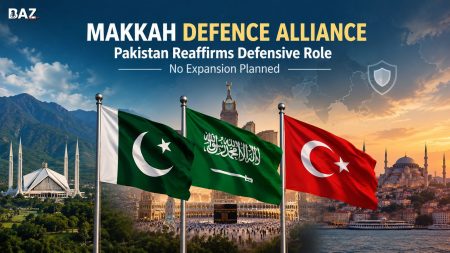
Pakistan has clarified that the newly established Makkah Defence Alliance between Pakistan, Saudi Arabia and Turkiye is a defensive security pact aimed at strengthening regional deterrence rather than targeting any particular country. The clarification comes at a sensitive time for the Middle East, following renewed Houthi attacks on Saudi territory and growing concerns over a wider regional conflict.
Pakistan’s Foreign Office has also said that there are currently no plans to expand the Makkah Defence Alliance, indicating that the three founding members will first focus on strengthening the alliance’s institutional structure and defence cooperation.
What Is the Makkah Defence Alliance?
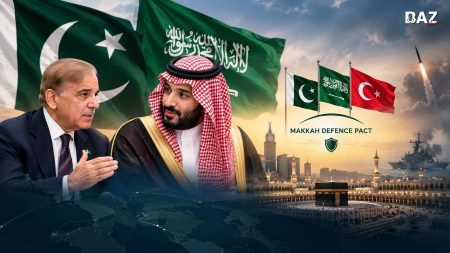
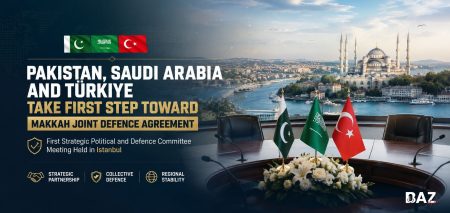
The Makkah Defence Alliance, formally established through the Makkah Joint Defence Agreement, brings together Pakistan, Saudi Arabia and Turkiye in a framework for enhanced collective security and defence cooperation.
The agreement was signed on August 7, 2026, in Makkah by Saudi Crown Prince Mohammed bin Salman, Turkish President Recep Tayyip Erdogan and Pakistani Prime Minister Shehbaz Sharif. Its central principle is that an armed attack against one of the three countries will be regarded as an attack against all three.
The pact is designed to strengthen collective deterrence and expand cooperation across defence-related areas. Following the agreement, the three countries established a Strategic Political and Defence Committee to further institutionalise their cooperation.
At a meeting in Istanbul on August 31, the countries agreed to establish a permanent secretariat in Saudi Arabia. Pakistan is set to provide the alliance’s first Secretary General for an initial three-year term.
Pakistan Calls the Alliance Defensive
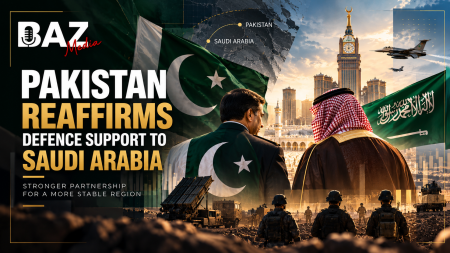
Pakistan’s Foreign Office has emphasised that the Makkah Defence Alliance is defensive in nature.
Foreign Office spokesperson Sajjad Haider Khan said the alliance is intended to promote regional security primarily through deterrence and is not directed against any specific country.
This distinction is particularly important given the region’s complex geopolitical environment. Relations between major Middle Eastern powers remain tense, while conflicts involving Yemen, Iran, Saudi Arabia and other regional actors continue to create security concerns.
By describing the pact as defensive rather than offensive, Pakistan is signalling that its primary objective is to protect the sovereignty and territorial integrity of its members rather than establish a military bloc against a particular adversary.
No Immediate Expansion of the Makkah Alliance
Another significant development is Pakistan’s position on expanding the alliance.
According to the Foreign Office, expansion of the Makkah Defence Alliance is not currently being considered. The three founding countries intend to first consolidate their cooperation and develop the alliance’s institutional framework.
The decision does not necessarily rule out future expansion. Earlier statements from Pakistani and Turkish officials indicated that other friendly countries could potentially participate if they accepted the alliance’s principles.
However, Islamabad now appears focused on strengthening the trilateral arrangement before considering additional members.
This approach could allow Pakistan, Saudi Arabia and Turkiye to establish clearer mechanisms for military coordination, strategic consultation and collective deterrence before introducing new participants.
Houthi Attacks Increase Pressure on the Pact
The latest clarification comes as security tensions around Saudi Arabia have intensified.
Yemen’s Houthi forces recently launched attacks targeting Saudi territory, including military and energy-related infrastructure. Saudi authorities reported that the attacks injured dozens of people, while the escalation raised concerns about the potential spread of the Yemen conflict into Saudi Arabia.
Pakistan Defence Minister Khawaja Asif subsequently warned that the Makkah Defence Alliance could become operational if the conflict in Yemen spills over into Saudi territory. He stressed that under the agreement, aggression against one member is treated as aggression against all three.
However, Pakistan’s Foreign Office has clarified that no immediate military response has been discussed under the pact following the recent Houthi attacks.
This distinction is important. While the agreement establishes a collective defence framework, its existence does not automatically mean that Pakistan, Saudi Arabia and Turkiye are preparing for immediate military action.
What Does the Makkah Defence Pact Mean for Pakistan?
For Pakistan, the alliance represents an important expansion of its strategic defence relationships.
Pakistan has longstanding defence cooperation with both Saudi Arabia and Turkiye. Bringing these relationships into a formal trilateral framework could increase opportunities for joint exercises, defence technology cooperation, intelligence coordination and military planning.
The alliance could also strengthen Pakistan’s strategic position in the wider Middle East while allowing Islamabad to maintain its longstanding preference for diplomatic engagement and regional stability.
The three countries have already indicated that their cooperation could include defence industry collaboration, joint technology development and production, potentially creating opportunities for deeper military-industrial cooperation.
Regional Security Implications
The emergence of the Makkah Defence Alliance could have broader consequences for Middle East security and regional geopolitics.
Saudi Arabia brings significant economic and strategic influence, Turkiye contributes substantial military capabilities and NATO experience, while Pakistan possesses one of the region’s largest and most experienced armed forces.
Together, the three countries could create a significant defence cooperation platform.
At the same time, the alliance faces a delicate diplomatic challenge. Its members have repeatedly stressed that it is not aimed at any specific country, an important message given tensions involving Iran and other regional actors.
Pakistan’s decision to emphasise deterrence and avoid immediate expansion could therefore be an attempt to balance stronger collective defence with diplomatic efforts to prevent further regional escalation.
What Happens Next?
The immediate priority appears to be institution-building rather than alliance expansion.
The three founding countries are expected to continue developing the alliance’s mechanisms for political consultation, defence coordination and collective deterrence. A permanent secretariat in Saudi Arabia is expected to provide an institutional base for this cooperation.
For Pakistan, the coming months could reveal how the Makkah Defence Alliance translates its commitments into practical military and diplomatic coordination.
The recent Houthi attacks have already provided an early test of the alliance’s political significance. While Islamabad has not announced an immediate military response, its officials have made clear that the agreement carries collective defence obligations.
Conclusion
The Makkah Defence Alliance between Pakistan, Saudi Arabia and Turkiye marks a significant development in regional defence cooperation. Pakistan’s latest statement makes two points clear: the alliance is intended to be defensive and deterrence-oriented, and expansion is not currently on the agenda.
For now, the three founding members appear focused on consolidating their partnership, strengthening defence cooperation and building the alliance’s institutional structure.
As tensions continue across the Middle East, the Makkah pact will likely remain closely watched as Pakistan, Saudi Arabia and Turkiye attempt to strengthen regional security while avoiding a wider escalation.