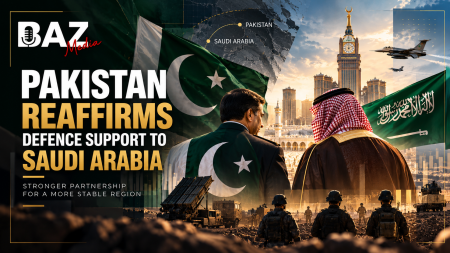
Islamabad: Pakistan has reiterated its commitment to safeguarding Saudi Arabia’s sovereignty and territorial security as escalating tensions in the Middle East raise concerns about regional stability.
Lieutenant General Ahmed Sharif Chaudhry, Director General of Inter-Services Public Relations (DG ISPR), outlined Pakistan’s position during an interview with Independent Arabia, highlighting Islamabad’s continued defence cooperation with Riyadh.
His remarks come amid renewed attacks attributed to Yemen’s Houthi movement and increasing international attention on the security arrangements between Pakistan, Saudi Arabia and Turkiye.
The latest developments place the Pakistan–Saudi Arabia defence partnership at the centre of a broader discussion about military cooperation, collective deterrence and diplomatic efforts to prevent further conflict.
Pakistan Reaffirms Its Commitment to Saudi Arabia’s Security
Pakistan’s military leadership has emphasized that protecting Saudi Arabia’s territorial integrity and the sanctity of Islam’s two holiest mosques remains a fundamental national commitment.
According to DG ISPR Lieutenant General Ahmed Sharif Chaudhry, Islamabad is already extending defence assistance to the kingdom and intends to continue supporting its security requirements.
The military spokesperson did not disclose specific operational details, explaining that the nature and scale of assistance provided through defence partnerships are not generally made public.
The statement reinforces Pakistan’s longstanding military relationship with Saudi Arabia, which has included training, advisory cooperation and other defence-related activities over several decades.
Beyond military coordination, the two countries maintain close political, economic and diplomatic relations, making regional stability an important shared priority.
Houthi Attacks Raise Security Concerns in Saudi Arabia
The renewed security concerns follow a series of missile and drone attacks attributed to Yemen’s Houthi movement.
Recent incidents have increased fears of further escalation and brought renewed attention to Saudi Arabia’s air defence capabilities, critical infrastructure and border security.
The conflict also carries implications beyond the immediate battlefield.
Saudi Arabia plays a major role in global energy markets, international trade and the wider Muslim world. Prolonged instability could affect investor confidence, transportation networks, energy supply chains and regional economic activity.
For Pakistan, developments in the kingdom carry additional importance because of the close relationship between the two countries and the large Pakistani community living and working in Saudi Arabia.
Against this backdrop, Islamabad’s latest statements demonstrate the importance it attaches to preventing further deterioration in regional security.
What Is the Makkah Defence Alliance?
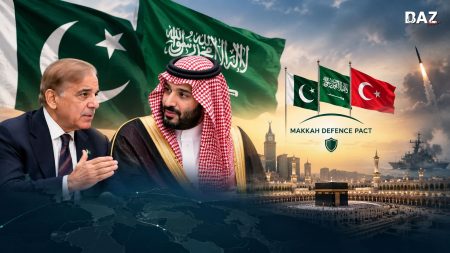
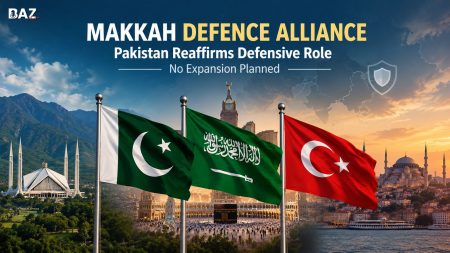
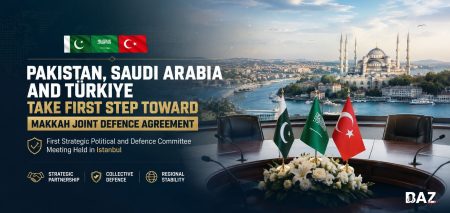
One of the most significant developments in Pakistan’s regional defence strategy is the emergence of the Makkah Joint Defence Alliance, bringing together Pakistan, Saudi Arabia and Turkiye.
Established in August 2026, the arrangement seeks to strengthen security cooperation through a framework of collective deterrence.
The alliance is built around the principle that threats against one participating country can have consequences for the security of the others.
Its broader objectives include:
- Strengthening coordination between participating armed forces.
- Improving collective defence readiness.
- Enhancing strategic communication and military cooperation.
- Discouraging aggression against member countries.
- Supporting regional peace and stability.
The agreement builds on the existing Strategic Mutual Defence Agreement between Pakistan and Saudi Arabia.
Together, these arrangements represent an increasingly structured approach to regional defence cooperation.
However, the participating countries have emphasized that the alliance is intended for defensive purposes rather than territorial expansion or offensive military campaigns.
Pakistan, Saudi Arabia and Turkiye Move Towards Closer Defence Coordination
The relationship between the three countries has evolved beyond diplomatic declarations into more practical security discussions.
In October 2026, representatives of Pakistan, Saudi Arabia and Turkiye agreed on measures intended to facilitate the deployment of agreed military capabilities in Saudi Arabia.
The decision followed growing concerns over attacks on the kingdom and reflected a shared interest in improving preparedness.
The practical implementation of such arrangements remains subject to operational requirements, political decisions and applicable national laws.
This distinction is important because defence cooperation does not necessarily mean that participating countries are preparing for offensive military action.
Instead, the alliance’s stated purpose is to strengthen deterrence by demonstrating that member countries can coordinate their responses to security threats.
Is Pakistan Preparing for a Wider Middle East Conflict?
Pakistan’s latest defence statements have prompted questions about whether its military commitments could lead to deeper involvement in regional hostilities.
However, the government’s publicly stated position continues to emphasize both security cooperation and diplomatic restraint.
DG ISPR has described the Makkah alliance as defensive and indicated that its purpose is to discourage threats rather than initiate military confrontation.
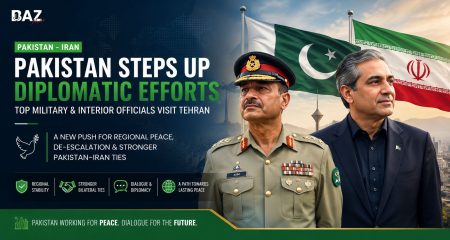
Pakistan has also maintained diplomatic engagement with regional stakeholders, including Iran, as part of efforts to reduce tensions.
This approach reflects two parallel priorities: honouring existing defence commitments and supporting political solutions to conflicts that could destabilize the wider region.
The distinction between deterrence and direct military engagement will remain important as the security situation develops.
Why the Pakistan–Saudi Arabia Defence Partnership Matters
Pakistan and Saudi Arabia share a relationship shaped by longstanding political ties, religious connections, economic cooperation and military engagement.
For Islamabad, Saudi Arabia remains an important strategic partner in the Middle East.
For Riyadh, Pakistan represents an established defence partner with significant military experience and a history of security cooperation.
The partnership also carries broader geopolitical implications.
1. Regional Security
Closer defence coordination may strengthen deterrence and improve the ability of participating countries to respond to emerging threats.
2. Protection of Strategic Infrastructure
Saudi Arabia’s energy facilities, transport networks and other critical infrastructure are important to both regional and international economic stability.
3. Diplomatic Influence
Pakistan’s relationships across the Middle East may provide opportunities to support communication and de-escalation during periods of heightened tension.
4. Economic Stability
A more secure regional environment can help protect trade, investment and the interests of expatriate communities.
5. Strategic Cooperation
The evolving defence arrangements illustrate how established bilateral relationships can develop into broader multilateral security frameworks.
The Importance of Diplomacy in Preventing Further Escalation
Although Pakistan has reaffirmed its security commitments, diplomatic engagement remains a central element of its regional approach.
The government has consistently highlighted the importance of dialogue and negotiated solutions to regional disputes.
This position is especially relevant as military escalation can create wider humanitarian, economic and political consequences.
For countries connected through trade, energy markets and regional security arrangements, the effects of prolonged conflict can extend well beyond national borders.
Pakistan’s challenge will be to maintain its defence commitments while supporting efforts that reduce the likelihood of a wider confrontation.
What Happens Next?
Several developments will determine how the Pakistan–Saudi Arabia defence partnership evolves in the coming months.
The first is whether attacks against Saudi Arabia continue or regional tensions begin to ease.
The second is how the Makkah Defence Alliance translates its agreements into practical security cooperation.
The third is whether diplomatic initiatives involving Pakistan and other regional actors create opportunities for de-escalation.
Any expansion of the alliance or significant changes in its operational role would also attract international attention.
For now, Pakistan’s public position remains centred on defending Saudi Arabia’s security, maintaining strategic cooperation and supporting regional stability.
Conclusion
Pakistan’s latest assurances to Saudi Arabia underline the depth of a longstanding defence partnership at a time of heightened Middle East tensions.
The growing importance of the Makkah Defence Alliance also reflects a broader shift towards coordinated regional security arrangements involving Pakistan, Saudi Arabia and Turkiye.
While military preparedness remains a major component of the relationship, diplomatic engagement and conflict prevention are equally important to the region’s future.
As developments continue, the effectiveness of collective deterrence and the prospects for peaceful negotiations will be closely watched across the Middle East and beyond.