A Rising Diplomatic Flashpoint
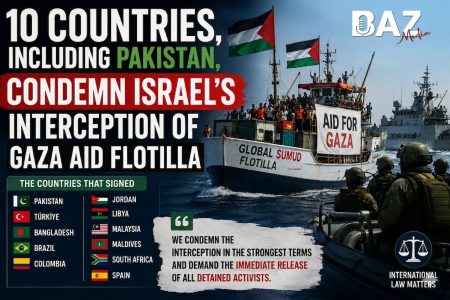
A major diplomatic escalation has emerged as 10 countries, including Pakistan, jointly condemned the interception of a humanitarian aid flotilla bound for Gaza by Israeli forces. The coordinated statement has intensified global scrutiny over maritime operations, humanitarian access, and the legality of restricting civilian aid missions in conflict zones.
The flotilla, widely referred to as the Global Sumud Flotilla, was reportedly carrying humanitarian assistance intended for civilians in Gaza. Its interception has sparked accusations of violating international law and obstructing essential relief efforts.
This development has added another layer of geopolitical tension in an already highly sensitive regional conflict.
What Was the Gaza Aid Flotilla?
The intercepted convoy, known as the Global Sumud Flotilla, was a civilian-led humanitarian initiative aimed at delivering relief supplies to Gaza.
The mission was organized by international activists and humanitarian groups seeking to highlight the worsening humanitarian situation in Gaza and to physically deliver aid supplies amid ongoing restrictions.
According to the joint statement, the flotilla’s purpose was strictly humanitarian, with no military or political intent, making its interception a point of serious international concern.
Interception at Sea: What Happened?
Reports indicate that the flotilla was intercepted while En route to Gaza waters. Israeli naval forces reportedly boarded or redirected the vessels and detained several activists on board.
The action triggered immediate diplomatic responses, with multiple governments demanding clarification on the legal grounds for the interception, especially considering international maritime routes and humanitarian law protections.
Critics argue that such actions may violate principles governing freedom of navigation and humanitarian access in international waters.
Countries That Signed the Joint Statement
The joint condemnation was signed by 10 countries:
- Pakistan
- Türkiye
- Bangladesh
- Brazil
- Colombia
- Jordan
- Libya
- Malaysia
- Maldives
- South Africa
- Spain
Together, these nations issued a unified diplomatic message condemning the interception and calling for accountability and immediate release of detained individuals.
Key Demands in the Joint Statement
The statement reportedly emphasized several core demands:
Immediate Release of Activists
The signatory countries called for the immediate release of all detained humanitarian workers and activists involved in the flotilla mission.
Respect for International Law
They urged adherence to international maritime and humanitarian law, particularly regarding civilian aid missions in conflict zones.
Protection of Humanitarian Access
The statement stressed that aid delivery to civilians must not be obstructed under any circumstances.
Accountability for the Interception
The coalition called for clarity and justification regarding the interception operation.
Legal and Diplomatic Concerns
At the center of the controversy is a critical legal question: does intercepting a humanitarian flotilla in international waters violate international law?
International legal experts often argue that:
- Civilian vessels in international waters are generally protected under maritime law
- Humanitarian aid missions are granted additional protections under international humanitarian law
- Blocking aid delivery may be interpreted as a restriction on civilian survival assistance in conflict zones
This is why the incident has triggered strong diplomatic language from multiple countries and renewed global debate over maritime enforcement in conflict regions.
Pakistan’s Diplomatic Position
Pakistan has consistently maintained a strong diplomatic stance on humanitarian access to Gaza, repeatedly calling for:
- Ceasefire in conflict zones
- Unrestricted humanitarian aid delivery
- Protection of civilians under international law
By joining this joint statement, Pakistan reinforces its broader foreign policy narrative emphasizing humanitarian law, multilateral diplomacy, and civilian protection in conflict situations.
This move also aligns Pakistan with a wider coalition of countries advocating for urgent humanitarian intervention and international accountability.
Global Reactions and Geopolitical Impact
The joint condemnation highlights growing international divisions over the Gaza conflict and humanitarian access routes.
Key implications include:
Increased Diplomatic Pressure
The coordinated statement increases diplomatic pressure on Israel to justify its maritime enforcement actions.
Strengthened Global South Unity
A significant number of participating countries are from the Global South, signaling a collective diplomatic voice on humanitarian issues.
Expanded Legal Debate
The incident is likely to fuel ongoing discussions at international legal forums regarding maritime conduct in conflict zones.
Why This Story Matters Globally
This is not just a regional incident it reflects broader global themes:
- Humanitarian aid access during war
- Enforcement of maritime boundaries
- Role of international coalitions in conflict diplomacy
- Rising polarization in global governance systems
The flotilla interception has become a symbolic flashpoint in the ongoing debate over humanitarian corridors and international accountability.
Conclusion
The joint condemnation by 10 countries, including Pakistan, marks a significant diplomatic response to the interception of the Gaza aid flotilla. With rising international concern over humanitarian access and maritime law, the incident is likely to remain a focal point in global diplomacy discussions.