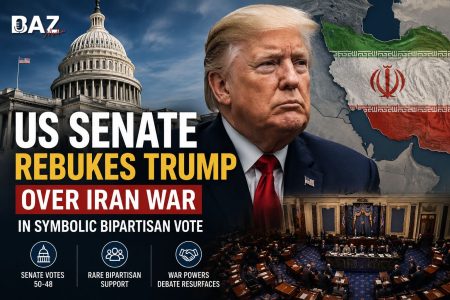

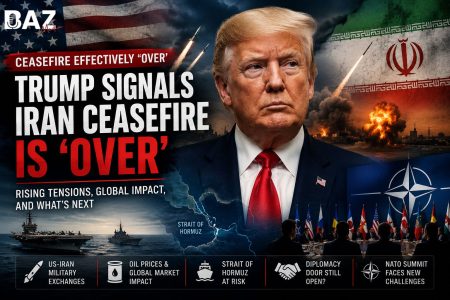
The fragile calm between the United States and Iran appears to be fading after former U.S. President Donald Trump declared that the ceasefire is effectively over following the latest exchange of military strikes. While Trump emphasized that diplomacy remains possible, his remarks signal a significant shift in tone, raising concerns that the region could once again move toward a broader military confrontation.
The renewed tensions come at a critical moment, just as global leaders prepare for the upcoming NATO summit. Security analysts warn that the escalating crisis may overshadow discussions on European defense, reshape diplomatic priorities, and increase uncertainty across global energy and financial markets.
Trump’s Latest Remarks Mark a Shift
Trump has previously characterized similar military exchanges as limited incidents while maintaining that ceasefire agreements remained intact. His latest statement, however, suggests a different approach.
According to his recent comments, the ceasefire has effectively ended, although diplomatic channels have not been completely closed. Trump indicated that negotiations remain technically possible but questioned their value, suggesting they may ultimately prove to be “a waste of time.”
This tougher rhetoric reflects a strategy that combines diplomatic pressure with military deterrence. Rather than projecting confidence in negotiations, the message appears designed to increase leverage while signaling readiness for further action if necessary.
Why the Ceasefire Matters
Ceasefires serve as temporary barriers preventing isolated military incidents from escalating into wider regional wars. Once those barriers weaken, the likelihood of retaliatory strikes increases significantly.
If the ceasefire formally collapses, several immediate risks emerge:
- Additional military strikes between the United States and Iran
- Increased involvement of regional proxy groups
- Greater instability throughout the Middle East
- Higher risks to international shipping routes
- Rising geopolitical uncertainty for global markets
Although neither Washington nor Tehran has officially announced a full-scale military campaign, analysts believe that continued retaliation could rapidly expand the conflict beyond bilateral exchanges.
The Strait of Hormuz Could Become the Biggest Flashpoint
One of the greatest international concerns remains the Strait of Hormuz, one of the world’s most strategically important maritime corridors.
Nearly one-fifth of global oil shipments pass through this narrow waterway every day. Any military escalation near the Strait immediately raises concerns over:
- Oil supply disruptions
- Shipping insurance costs
- Energy market volatility
- Global inflationary pressures
- Delays in international trade
Even limited naval confrontations could trigger significant spikes in oil prices, affecting consumers and businesses worldwide.
Countries heavily dependent on imported energy including many European and Asian economies would likely feel the economic impact first.
NATO Summit Faces Unexpected Pressure
The timing of the renewed tensions presents another major challenge.
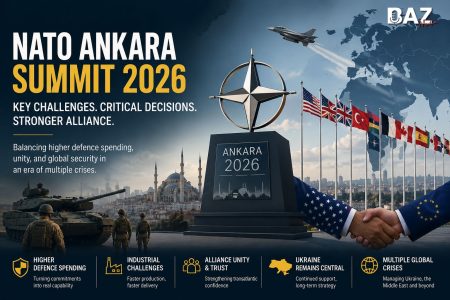
NATO leaders are expected to focus on European security, defense spending, and continued support for Ukraine. However, an expanding Middle East crisis could quickly dominate diplomatic discussions.
Alliance members may differ on several key questions:
- How strongly should NATO support U.S. military actions?
- Should additional naval deployments be considered?
- How can European energy supplies remain secure?
- Should diplomacy take priority over military deterrence?
These differing perspectives could expose internal disagreements within the alliance, complicating efforts to present a unified strategic position.
Markets React Quickly to Geopolitical Risk
Financial markets traditionally respond rapidly to geopolitical uncertainty, particularly when energy-producing regions are involved.
A prolonged US-Iran confrontation could influence:
Energy Prices
Oil prices typically rise whenever conflict threatens Gulf production or shipping routes. Even rumors of military escalation often increase market volatility.
Global Stock Markets
Investors generally move toward safer assets during periods of geopolitical uncertainty, creating increased volatility across international equity markets.
Defense Industry
Heightened regional tensions frequently result in greater defense spending and increased investor interest in military and security sectors.
Shipping and Insurance
Commercial shipping companies may face higher insurance premiums and operational costs if maritime risks continue to increase.
Is Diplomacy Still Possible?
Despite his stronger language, Trump has not completely ruled out negotiations.
This dual-track strategy combining military pressure with diplomatic openness is common in international crisis management. The objective is often to encourage concessions while maintaining strategic leverage.
However, such an approach carries substantial risks.
If Iran interprets the messaging as coercive rather than constructive, diplomatic engagement could become increasingly difficult. Miscommunication or further military incidents may reduce opportunities for meaningful dialogue.
Ultimately, successful negotiations require both parties to believe that diplomacy offers greater benefits than continued escalation.
What Happens Next?
Several developments over the coming days will determine whether the situation stabilizes or deteriorates further.
Observers will closely monitor:
- Additional military activity by either side
- Statements from Washington and Tehran
- Naval movements near the Strait of Hormuz
- Emergency diplomatic initiatives
- NATO summit discussions
- Reactions from regional allies
Each development will provide important signals regarding whether the ceasefire can be restored or whether the conflict is entering a more dangerous phase.
Global Implications Extend Beyond the Middle East
Although the conflict is centered in the Middle East, its consequences extend far beyond the region.
Energy markets, international shipping, defense alliances, global trade, and financial stability are all interconnected. A sustained escalation between the United States and Iran could reshape diplomatic priorities and influence economic conditions worldwide.
For governments, investors, and businesses alike, maintaining stability remains the preferred outcome. Yet with military exchanges continuing and political rhetoric becoming increasingly confrontational, uncertainty is likely to remain elevated.
Conclusion
Trump’s declaration that the Iran ceasefire is effectively over represents a notable shift in political messaging and raises fresh concerns about regional security. While diplomacy remains officially possible, the latest exchange of strikes demonstrates how fragile the current situation has become.
Whether this marks the beginning of renewed negotiations or a deeper military confrontation will depend largely on decisions made in Washington, Tehran, and among international allies in the coming days.
For now, the world is watching closely as one of the most sensitive geopolitical flashpoints once again tests global stability.