2026 FIFA World Cup: Five Questions That Could Define Football’s Next Decade
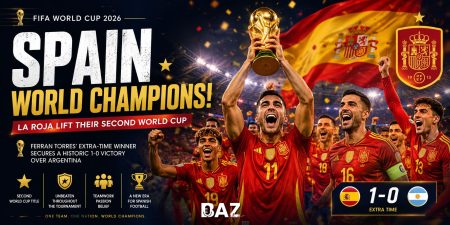
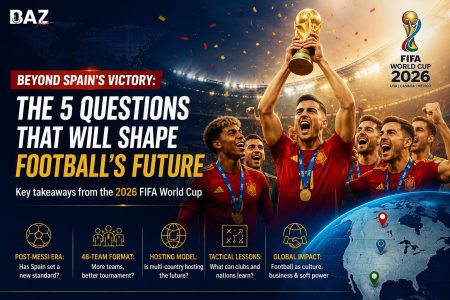
The 2026 FIFA World Cup ended with Spain lifting football’s biggest prize after defeating defending champions Argentina 1-0 in extra time. Ferran Torres’ decisive goal sparked celebrations across Spain and marked the country’s second men’s World Cup title.
Yet while the confetti has settled, the tournament has left football fans, analysts, coaches, and governing bodies asking far bigger questions than who won the trophy.
The first-ever 48-team FIFA World Cup, jointly hosted by the United States, Canada, and Mexico, represented one of the most ambitious transformations in football history. It delivered unforgettable moments, emerging stars, tactical innovations, and record-breaking commercial success.
But what lasting impact will it leave?
Here are the five biggest questions that will shape football after the 2026 FIFA World Cup.
Has Spain Become Football’s New Standard?
For years, international football revolved around superstar narratives.
Lionel Messi defined Argentina.
Cristiano Ronaldo inspired Portugal.
Kylian Mbappé carried France.
Spain’s latest triumph, however, suggests something different.
Rather than relying on one iconic figure, Spain demonstrated the value of collective football built around technical excellence, intelligent pressing, tactical flexibility, and a world-class youth academy.
Throughout the tournament, Spain controlled possession, defended with remarkable discipline, and consistently adapted to different opponents.
Their success raises an important question:
Countries may now invest even more heavily in youth development, technical midfielders, and cohesive tactical structures instead of searching for the next global icon.
Spain’s victory could redefine what winning football looks like in the modern era.
Did the 48-Team World Cup Actually Improve the Tournament?
The biggest talking point before kickoff wasn’t any team.
It was FIFA’s expanded format.
For the first time ever, 48 nations competed in the World Cup, giving more countries an opportunity to participate.
The expansion certainly created new storylines.
Smaller football nations gained global exposure.
Fans witnessed fresh rivalries.
More continents remained involved deeper into the tournament.
However, critics continue asking whether the additional teams truly increased competitiveness.
Some matches lacked intensity.
Scheduling became significantly more demanding.
Player fatigue became increasingly visible as the tournament progressed.
The expanded format also required more travel across three countries, increasing logistical complexity for teams and supporters alike.
As FIFA prepares future tournaments, data from 2026 will determine whether expansion strengthened football or simply made the competition longer.
Is Multi-Country Hosting the Future of Mega Sporting Events?
The United States, Canada, and Mexico jointly hosted the largest World Cup in history.
Instead of placing financial pressure on one nation, responsibilities were shared across three countries.
The model offered several advantages.
Existing stadiums reduced infrastructure costs.
Transportation networks already existed.
Tourism spread across multiple regions.
Commercial opportunities expanded dramatically.
Yet significant questions remain.
Can smaller countries realistically replicate this approach?
Did local communities receive long-term economic benefits?
Will expensive stadiums continue generating value after the tournament?
Mega sporting events often promise economic transformation, but measuring their lasting impact takes years.
The 2026 World Cup may ultimately become the blueprint for future FIFA tournaments or reveal the limitations of multinational hosting.
What Tactical Lessons Will Coaches Study for Years?
Every World Cup changes football tactics.
The 2026 edition was no exception.
Spain showcased how modern pressing, controlled possession, intelligent rotations, and squad depth can outperform teams relying heavily on individual brilliance.
Several tactical trends stood out:
- High defensive lines became increasingly effective.
- Goalkeepers played larger roles in build-up play.
- Squad rotation proved essential during the longer tournament.
- Data analytics influenced substitutions and match preparation.
- Flexible formations replaced rigid tactical systems.
Managers across Europe, South America, and Asia will spend months analyzing these patterns.
Youth academies are also likely to incorporate many of Spain’s tactical principles into future player development programs.
The tournament demonstrated that modern football increasingly rewards intelligence, versatility, and teamwork over isolated moments of genius.
Has Football Become One of the World’s Strongest Soft Power Tools?
The World Cup has always been more than football.
It is culture.
Business.
Politics.
Tourism.
Global branding.
The 2026 tournament highlighted how football now functions as one of the world’s most influential diplomatic platforms.
Host nations promoted their cultures before billions of viewers.
Sponsors reached record global audiences.
Governments strengthened international visibility through sport.
Meanwhile, discussions surrounding host selection, sustainability, human rights, and commercial influence continued alongside the matches.
Spain’s celebrations became a symbol of national unity.
Argentina’s defeat sparked emotional reflection on the closing chapter of one of football’s greatest generations.
The tournament proved once again that football shapes conversations far beyond the pitch.
Future World Cups will likely face even greater expectations not only to entertain but also to deliver lasting social, economic, and political value.
What Comes Next?
The 2026 FIFA World Cup will be remembered for Spain’s remarkable victory.
But history may judge it more for the questions it created than the trophy it awarded.
Can Spain establish a new football dynasty?
Will FIFA’s expanded format evolve further?
Is multinational hosting now the standard?
How will clubs adapt the tactical innovations seen throughout the tournament?
And can football continue balancing commercial growth with sporting integrity?
These questions won’t be answered overnight.
Instead, they will shape coaching philosophies, youth academies, transfer strategies, broadcasting investments, and future World Cups over the coming decade.