Iran Targets US Military Assets Across the Gulf as Regional Conflict Escalates
The conflict between Iran and the United States has entered a far more dangerous phase after Tehran launched missile attacks targeting US military infrastructure across the Gulf region, while Washington confirmed another round of strikes on Iranian military facilities.
What began as direct military exchanges inside Iran has now expanded beyond its borders, increasing the possibility of a wider regional conflict involving Gulf states that host American military bases. The latest developments have intensified concerns about regional security, global energy markets, and the risk of further escalation.
Iran Expands Its Military Response
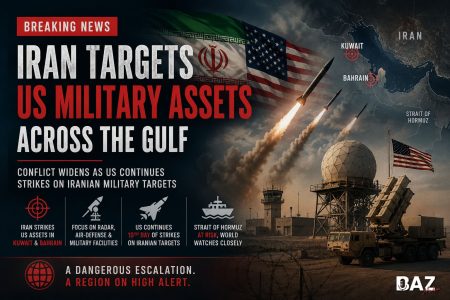
According to multiple international reports, Iran says it has struck US military assets in Kuwait and Bahrain, focusing on radar installations, air-defense systems, and administrative facilities.
Tehran described the attacks as retaliatory operations, warning that even stronger military responses could follow if US operations against Iranian targets continue.
Iran’s latest actions demonstrate a shift in strategy. Rather than limiting retaliation to locations inside Iran, it is now targeting critical American military infrastructure across neighboring Gulf countries that support US operations.
This marks one of the most significant expansions of the conflict since hostilities intensified.
The US Continues Military Operations
The United States has responded by maintaining pressure on Iranian military capabilities.
US officials confirmed that American forces carried out their 10th consecutive day of strikes, targeting:
- Iranian command and control centers
- Missile launch facilities
- Drone launch sites
- Maritime military assets
- Air-defense systems
Washington says these operations are designed to weaken Iran’s ability to launch future attacks while protecting American personnel and regional allies.
Despite repeated military exchanges, neither side has indicated a willingness to reduce military operations, suggesting the conflict may continue escalating.
Why the Gulf Region Is Becoming the New Frontline
The latest developments show that the confrontation is no longer confined to Iranian territory.
Instead, military operations are spreading across the Gulf, placing countries such as:
- Bahrain
- Kuwait
- Qatar
- United Arab Emirates
- Saudi Arabia
under increased security pressure because of the presence of American military installations.
Many of these countries host major US air bases, naval facilities, and missile-defense systems that play a central role in Washington’s regional strategy.
As more military assets become potential targets, the possibility of accidental escalation increases significantly.
Strait of Hormuz Faces Renewed Security Risks
One of the biggest global concerns remains the Strait of Hormuz.
This narrow waterway handles a significant portion of the world’s oil exports, making it one of the most strategically important shipping corridors on Earth.
Any expansion of military operations near the Strait could lead to:
- Shipping disruptions
- Higher insurance costs for cargo vessels
- Delays in global oil supplies
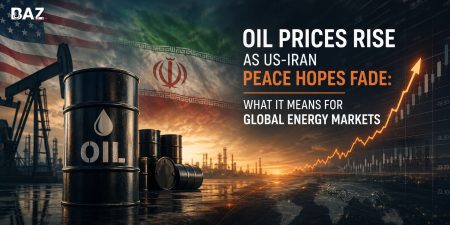
- Rising crude oil prices
- Increased market volatility
Even limited military incidents around the Strait have historically triggered immediate reactions in global energy markets.
Investors are now closely monitoring developments for any indication that maritime trade could be affected.
Regional Allies Face Growing Pressure
The latest Iranian strikes also place America’s regional allies in a delicate position.
Countries hosting US military facilities must now strengthen air defenses while attempting to avoid becoming direct participants in the conflict.
Regional governments are likely increasing surveillance, missile interception readiness, and coordination with American forces to prevent further attacks.
At the same time, diplomatic efforts may intensify behind the scenes to prevent a broader regional war.
Global Economic Impact Could Be Significant
Beyond military concerns, prolonged conflict carries serious economic risks.
Energy markets remain highly sensitive to instability in the Gulf.
If attacks continue or shipping lanes become threatened, consequences may include:
- Higher global oil prices
- Increased transportation costs
- Inflationary pressure worldwide
- Supply chain disruptions
- Greater uncertainty in international financial markets
Businesses, investors, and governments are therefore watching developments closely as each new military exchange carries economic implications far beyond the Middle East.
What Happens Next?
The immediate future depends largely on whether either side chooses escalation or restraint.
Iran has warned that additional attacks will follow if US military operations continue.
Meanwhile, Washington has shown no indication that it intends to halt its campaign against Iranian military infrastructure.
Military analysts suggest several possible scenarios:
- Continued limited military exchanges
- Expanded missile attacks on regional US facilities
- Increased naval activity around the Gulf
- Greater involvement by regional allies
- Renewed diplomatic efforts to prevent a wider war
The coming days will likely determine whether the conflict remains contained or evolves into a much broader regional confrontation.
Final Thoughts
The latest military exchanges represent a significant escalation in the Iran-US conflict, with the battlefield expanding beyond Iran into the wider Gulf region.
Iran’s reported strikes on American military infrastructure in Bahrain and Kuwait, combined with continued US operations against Iranian military targets, indicate that both sides are prepared to sustain military pressure rather than seek an immediate de-escalation.