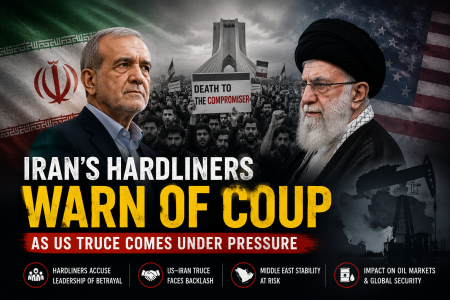
Iran’s Hardliners Accuse Government of a “Political Coup” as US Truce Comes Under Pressure
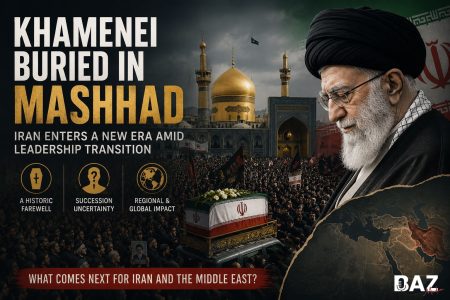
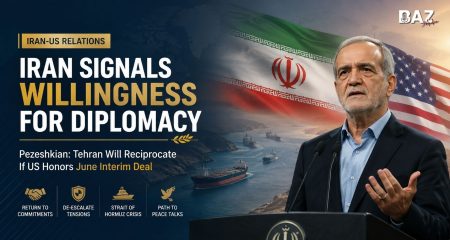
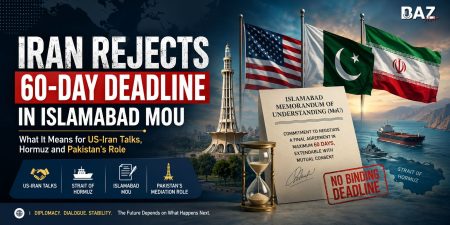
The fragile diplomatic opening between Iran and the United States is facing its biggest internal challenge yet. While the recent truce raised hopes of reducing tensions after months of military escalation, Iran’s hardline political factions are now accusing President Masoud Pezeshkian and senior officials of effectively staging a political coup by negotiating with Washington while Supreme Leader Ayatollah Ali Khamenei is absent or presumed dead.
The accusations have transformed what initially appeared to be a foreign policy debate into a broader struggle over the future direction of Iran’s leadership. As political divisions deepen, analysts believe the country’s internal power struggle could have significant consequences for regional security, diplomacy, and global energy markets.
Iran’s Political Divide Is Becoming Increasingly Public
Traditionally, Iran’s leadership has sought to project unity during periods of crisis. However, recent public events suggest that internal divisions are becoming increasingly difficult to conceal.
During funeral ceremonies attended by senior officials, hardline supporters reportedly chanted slogans such as “Death to the compromiser,” openly criticizing officials associated with negotiations with the United States.
These demonstrations represent more than emotional reactions. They signal growing resistance from influential conservative factions that believe the current government has abandoned revolutionary principles in pursuit of diplomatic normalization.
For hardliners, any agreement with Washington is viewed as a dangerous concession rather than a strategic pause designed to stabilize the country.
Why Hardliners Are Using the Term “Political Coup”
The phrase “political coup” is not being used to suggest a military takeover. Instead, it reflects accusations that Iran’s elected leadership has fundamentally altered national policy without the ideological guidance traditionally provided by the Supreme Leader.
Hardline politicians argue that senior negotiators have:
Shifted Iran’s foreign policy toward compromise.
Failed to adequately respond to perceived external threats.
Undermined decades of revolutionary doctrine.
Consolidated political authority during a period of leadership uncertainty.
From their perspective, these actions represent a dramatic departure from the country’s long-standing resistance strategy.
Supporters of the government, however, argue that diplomacy is necessary to prevent further military confrontation and economic isolation.
The Future of the Iran-US Truce Is Becoming Less Certain
The ceasefire and diplomatic engagement between Iran and the United States were widely viewed as an opportunity to reduce tensions following months of regional conflict.
However, internal political pressure now threatens that fragile progress.
Hardline factions continue demanding:
A more confrontational approach toward Washington.
Stronger military deterrence.
Reduced diplomatic engagement.
Greater emphasis on revolutionary ideology.
If these voices gain greater political influence, negotiations with the United States could become increasingly difficult, raising the possibility of renewed regional instability.
Why This Internal Conflict Matters Beyond Iran
Iran’s domestic politics rarely remain confined within its borders.
As one of the Middle East’s most influential regional powers, changes in Tehran’s political direction can affect:
Regional Security
Any collapse of diplomatic efforts could increase tensions involving Israel, Gulf states, and US military forces operating across the region.
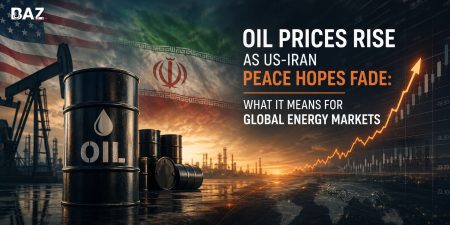
Global Oil Markets
Iran remains strategically positioned near the Strait of Hormuz, one of the world’s most important energy shipping routes.
Political instability inside Iran often contributes to market uncertainty, causing fluctuations in global oil prices and increasing concerns over supply disruptions.
International Diplomacy
Western governments have cautiously welcomed reduced hostilities, but renewed internal opposition could complicate future negotiations over sanctions, nuclear policy, and regional security arrangements.
Leadership Questions Continue to Shape Iran’s Political Landscape
One of the most significant elements of the current crisis is uncertainty surrounding Iran’s leadership structure.
With questions surrounding Supreme Leader Ali Khamenei’s role dominating political discussion, multiple factions appear to be positioning themselves for greater influence over the country’s future.
Observers suggest the dispute extends well beyond disagreements over relations with the United States.
Instead, it reflects competing visions for Iran’s long-term political identity:
Continue prioritizing confrontation and revolutionary resistance.
Pursue pragmatic diplomacy to reduce international pressure.
Balance ideological commitments with economic recovery.
The outcome of this debate could shape Iranian politics for years to come.
Economic Pressures Are Also Influencing the Debate
Iran continues to face substantial economic challenges, including sanctions, inflation, currency depreciation, and limited foreign investment.
Supporters of diplomatic engagement argue that reducing tensions with Washington could eventually improve economic conditions by encouraging greater international cooperation and easing external pressure.
Hardliners disagree.
They believe compromising with the United States risks weakening national sovereignty without guaranteeing meaningful economic benefits.
This economic dimension explains why the political debate has become increasingly intense, with both sides presenting their approach as essential for protecting Iran’s future.
Could the Political Crisis Escalate Further?
Political analysts caution that Iran’s current divisions should not automatically be interpreted as an imminent collapse of government institutions.
Instead, the country appears to be experiencing an unusually visible struggle between competing centers of power.
Several possible outcomes remain plausible:
The government successfully preserves the diplomatic truce despite criticism.
Hardline factions gain greater influence, leading to tougher foreign policy positions.
Internal political negotiations produce a compromise that temporarily stabilizes the situation.
Renewed regional tensions derail diplomatic progress altogether.
Much will depend on how Iran’s political establishment manages growing ideological divisions in the coming months.
Final Thoughts
The accusations of a “political coup” highlight far more than disagreement over diplomacy with the United States. They reveal a deeper contest over Iran’s political future, leadership, and strategic direction.
As hardliners intensify their criticism of President Masoud Pezeshkian and other negotiators, the fragile US-Iran truce faces mounting domestic resistance. Whether diplomacy survives or gives way to renewed confrontation will depend not only on international negotiations but also on the outcome of Iran’s evolving internal power struggle.
For policymakers, investors, and regional observers alike, developments inside Tehran may prove just as consequential as events unfolding beyond its borders.