Climate Crisis Deepens as UN Predicts Dangerous Warming Trend
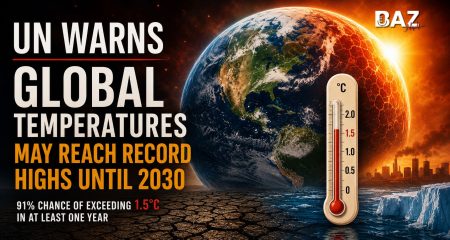
The United Nations’ World Meteorological Organization (WMO) has issued a major climate warning that global temperatures are expected to remain at or near record-breaking levels between 2026 and 2030. According to the latest report, there is now a 91% chance that at least one year during this period will exceed the critical 1.5°C warming threshold compared to pre-industrial levels.
The findings highlight the accelerating pace of climate change and raise urgent concerns about extreme weather events, rising sea levels, heatwaves, droughts, and global environmental instability. Scientists say the world is moving closer to irreversible climate tipping points if greenhouse gas emissions continue at current levels.
Global Temperatures Could Exceed Paris Agreement Limits
The Paris Climate Agreement established a goal to limit global warming to 1.5°C above pre-industrial temperatures. However, the WMO’s latest climate forecast suggests that the world may temporarily surpass that limit within the next five years.
Scientists warn that even temporary breaches of the 1.5°C target can intensify climate disasters worldwide and place additional pressure on ecosystems, economies, and public health systems.
Why Are Global Temperatures Rising So Fast?
The primary driver of global warming remains the burning of fossil fuels such as coal, oil, and natural gas. These activities release greenhouse gases like carbon dioxide and methane into Earth’s atmosphere, trapping heat and causing long-term warming.
Human activities contributing to climate change include:
Industrial emissions
Deforestation
Transportation pollution
Excessive energy consumption
Agricultural methane emissions
Climate experts also noted that a new El Niño weather pattern expected later in 2026 could temporarily increase global temperatures even further. El Niño events naturally warm ocean waters in the Pacific and often contribute to hotter global conditions.
The previous El Niño event played a major role in making 2024 the hottest year ever recorded in human history.
The Hottest Years in History Are Happening Right Now
One of the most alarming findings in the report is that all 11 of the hottest years ever recorded have occurred since 2015. This trend demonstrates that global warming is no longer a future problem it is already reshaping the planet.
Countries worldwide are experiencing:
Extreme heatwaves
Record-breaking wildfires
looding disasters
Water shortages
Melting glaciers
Stronger hurricanes and storms
Climate scientists say rising temperatures are increasing the frequency and intensity of these events across nearly every continent.
Impact of Rising Global Temperatures
More Dangerous Heatwaves
Extreme heat is becoming one of the deadliest consequences of climate change. Major cities around the world are already experiencing longer and hotter summers, putting millions of people at risk.
Heatwaves can cause:
Heat strokes
Dehydration
Respiratory illnesses
Increased deaths among vulnerable populations
Rising Sea Levels
Melting ice sheets and glaciers continue to raise sea levels globally. Coastal cities and island nations face growing threats from flooding and erosion.
Experts warn that millions of people could eventually be displaced due to climate-driven sea level rise.
Food and Water Insecurity
Climate change is disrupting agriculture by causing droughts, unpredictable rainfall, and crop failures. Rising temperatures also affect freshwater supplies, making water scarcity a growing global issue.
Countries heavily dependent on farming may face serious economic and humanitarian challenges.
Wildlife and Ecosystem Collapse
Many animal species are struggling to adapt to rapid environmental changes. Coral reefs, forests, and biodiversity hotspots are already experiencing severe damage from warming temperatures and pollution.
Scientists warn that continued warming could trigger irreversible ecosystem collapse.
Can the World Still Prevent Worse Climate Change?
Despite the alarming forecasts, climate experts say there is still time to reduce the worst impacts of global warming. Governments, businesses, and individuals all play a role in reducing emissions and transitioning toward sustainable energy solutions.
Key Climate Solutions Include:
Renewable Energy Expansion
Switching to solar, wind, and clean energy can significantly reduce greenhouse gas emissions.
Electric Vehicles
Reducing dependence on gasoline-powered transportation helps cut carbon pollution.
Forest Protection
Forests absorb carbon dioxide and help stabilize global temperatures.
Sustainable Industries
Industries can adopt cleaner production methods and reduce environmental waste.
International Climate Cooperation
Global agreements and climate policies remain essential for long-term progress.
What Experts Are Saying About the Climate Emergency
Climate scientists continue to stress that every fraction of a degree matters. Even small increases in global temperatures can dramatically increase the risks of severe weather events and environmental damage.
The WMO stated that the current warming trend is a clear signal that urgent climate action is needed immediately. Without aggressive emission reductions, the world may face increasingly dangerous and unpredictable climate conditions throughout the coming decades.
Environmental organizations are urging governments to strengthen climate commitments ahead of future international climate summits.
The Role of Individuals in Fighting Climate Change
While large-cale policy changes are essential, individuals can also contribute to climate solutions through daily choices.
Ways People Can Help:
Reduce energy consumption
Use public transportation
Support renewable energy
Reduce plastic waste
Plant trees
Choose sustainable products
Public awareness and collective action remain critical in addressing the climate crisis.
Final Thoughts
The UN’s latest climate warning serves as another major reminder that global warming is accelerating faster than many scientists previously expected. With temperatures projected to remain near record highs through 2030, the world faces growing environmental, economic, and humanitarian risks.
The next few years could become one of the most important periods in modern climate history. Whether global leaders take decisive action now may determine the future stability of ecosystems, economies, and communities worldwide.
The climate crisis is no longer a distant possibility it is unfolding in real time.