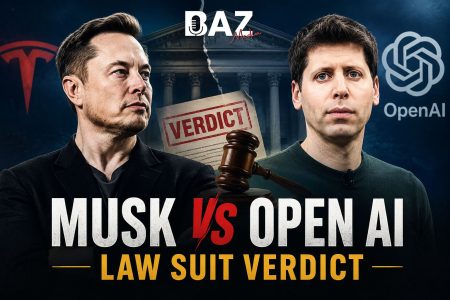
A High-Stakes AI Legal Battle Ends Unexpectedly
The legal confrontation between Elon Musk and Open AI along with CEO Sam Altman has officially taken a dramatic turn but not in the way many expected.
Instead of a courtroom ruling on whether Open AI betrayed its founding nonprofit mission, the case ended on a procedural dismissal. A nine-member jury concluded that the lawsuit was filed after the statute of limitations expired, effectively closing the case without addressing its core allegations.
What Happened in the Verdict?
The jury in Oakland determined that Musk’s claims were filed too late under legal time limits, meaning the court could not evaluate the substance of the allegations.
Key Legal Outcome:
- Case dismissed due to statute of limitations
- No ruling on whether Open AI violated its founding mission
- No legal judgment on nonprofit vs for-profit transformation claims
- Judge formally closed the case after jury finding
Why Elon Musk Filed the Lawsuit
Musk’s lawsuit centered around a core argument:
Open AI shifted away from its nonprofit mission and moved toward a profit-driven structure, benefiting private stakeholders.
Main Claims Included:
- Alleged departure from Open AI’s original charitable mission
- Concerns over commercialization of advanced AI systems
- Accusations of governance and ethical drift
- Request for structural changes in leadership
- Demand for significant financial damages
Musk, one of the early co-founders of Open AI, argued that the organization’s evolution contradicted its founding principles.
However, the court never evaluated whether these claims were valid.
Why the Court Never Reached the Core Issue
This is where the legal detail becomes critical.
The jury’s decision focused entirely on timing not truth.
Statute of Limitations Explained:
A statute of limitations is a legal deadline for filing lawsuits. If a case is filed too late, courts dismiss it regardless of merit.
In this case:
- The jury found Musk’s filing exceeded legal time limits
- That blocked examination of evidence and arguments
- The lawsuit ended before any deeper AI governance debate occurred
Why This Verdict Matters for the AI Industry
Although no judgment was made on the allegations, the impact is still massive for the global AI ecosystem.
1. Strengthens Open AI’s Current Position
The dismissal allows Open AI to continue operating without legal disruption to its structure or leadership.
2. Avoids a Precedent-Setting Ruling
A full trial could have reshaped:
- AI company governance models
- Nonprofit vs for-profit hybrid structures
- Investor rights in AI labs
3. Keeps AI Regulation Debate in Policy Space
Instead of courts, the debate now shifts to:
- Governments
- Regulators
- Corporate governance boards
The Bigger Story: AI Power and Control
At its core, this case was never just about two tech leaders. It represented a much larger question:
Who controls advanced artificial intelligence and under what legal framework?
With AI systems becoming increasingly powerful, organizations like Open AI sit at the center of:
- Global competition
- Ethical AI debates
- National security discussions
- Corporate power struggles
This lawsuit highlighted how legal systems are struggling to keep pace with AI evolution.
Why the Case Still Matters Even After Dismissal
Even though the case was dismissed, it leaves behind several important consequences:
1. Musk May Still Appeal
Musk has indicated he may challenge the decision in higher courts, meaning the dispute is not fully over.
2. Public Scrutiny of Open AI Continues
Regardless of legal outcomes, questions remain about:
- Transparency in AI development
- Profit vs public interest balance
- Governance of foundation linked AI companies
3. Legal Gap in AI Regulation Exposed
This case highlights a major issue:
- Existing laws were not designed for AI companies of this scale
- Courts are relying on outdated frameworks
A Legal Win, But Not the Final Word
The dismissal of Elon Musk’s lawsuit against Open AI marks a procedural victory for Open AI and Sam Altman, but it does not settle the deeper philosophical and governance questions surrounding artificial intelligence.
Instead, it leaves the tech world with more uncertainty than clarity.
As AI continues to evolve rapidly, one thing is clear:
The courtroom may not be the final battleground for the future of artificial intelligence but it is becoming one of the most important arenas shaping its direction.