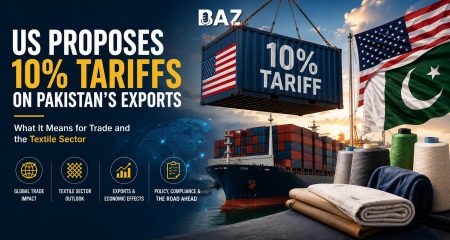
US Proposes 10% Tariffs on Pakistan’s Exports: What It Means for Businesses and Trade
The United States has proposed a new round of tariffs targeting imports from 60 economies, including Pakistan, under a sweeping investigation into forced labor-related trade practices. The proposal, announced by the Office of the United States Trade Representative (USTR), could impose a 10% tariff on Pakistani goods entering the US market, potentially affecting more than $6 billion worth of exports annually.
The move is part of a broader Section 301 investigation launched in March 2026 and could significantly impact Pakistan’s export-driven sectors, particularly textiles and apparel, which account for the overwhelming majority of the country’s exports to the United States.
With public consultations continuing through July 2026, businesses, exporters, and policymakers are closely watching how the proposed tariffs may reshape Pakistan-US trade relations.
What Are the New US Tariffs?
The USTR has proposed a two-tier tariff framework covering imports from 60 economies based on each country’s measures against forced labor-related trade practices.
Under the proposal:
- Countries with full or partial restrictions on forced labor imports face a 10% tariff
- Countries without such restrictions face a 12.5% tariff
- Public comments will remain open until July 6, 2026
- A public hearing is scheduled for July 7, 2026
Pakistan has been placed in the lower 10% tariff category because US authorities recognize some legal measures against forced labor imports, although concerns remain about enforcement mechanisms.
Why is the US imposing tariffs on Pakistan in 2026?
The tariffs stem from a Section 301 investigation into whether foreign trade practices related to forced labor create unfair competition and burden US commerce.
Why Pakistan Was Included in the Investigation
Pakistan’s inclusion does not mean the US has accused the country of widespread forced labor practices. Instead, the investigation focuses on whether countries have adequate laws and enforcement systems preventing products linked to forced labor from entering international supply chains.
According to the USTR’s findings:
- Pakistan has partial restrictions related to forced labor imports
- Enforcement measures are viewed as insufficient
- Additional reforms may be required to avoid future trade penalties
The classification places Pakistan in a relatively better position than countries such as India, China, Vietnam, and several Asian economies that face the higher proposed tariff rate of 12.5%.
Pakistan’s Textile Industry Faces the Biggest Risk
Pakistan Textile Exports to US Under Pressure
The textile and apparel sector is expected to be the most affected industry if the proposed tariffs are implemented.
Pakistan’s textile exports have been experiencing strong growth, driven largely by demand from North American markets. However, an additional tariff could increase costs across the supply chain.
Products most vulnerable include:
- Bed linen
- Terry towels
- Hosiery
- Garments
- Home textiles
- Cotton products
The sector already faces challenges from:
- High energy costs
- Currency volatility
- Regional competition
- Supply chain disruptions
- Rising production expenses
An additional 10% duty could further squeeze profit margins and reduce export competitiveness.
Potential Economic Impact on Pakistan
If the proposed tariff is applied to Pakistan’s entire export volume to the US, the financial implications could be substantial.
Estimated Impact
| Scenario | Potential Cost |
| 10% Tariff | $600 Million |
| 12.5% Tariff | $750 Million |
While importers often absorb part of the cost, tariffs frequently lead to:
- Reduced demand
- Lower export volumes
- Higher consumer prices
- Pressure on manufacturers
- Slower investment growth
For Pakistan, where exports play a crucial role in generating foreign exchange reserves, the consequences could extend beyond the textile industry.
Understanding Section 301 Tariffs
What Is Section 301?
Section 301 of the US Trade Act of 1974 allows Washington to investigate foreign trade practices that may unfairly disadvantage American businesses.
The law permits the US government to:
- Conduct trade investigations
- Negotiate trade remedies
- Impose tariffs
- Apply trade restrictions
Section 301 gained global attention during the US-China trade dispute when tariffs were imposed on hundreds of billions of dollar worth of Chinese goods.
The current investigation covering 60 economies represents one of the most extensive uses of Section 301 in recent years.
Why Is the US Pursuing This Strategy Now?
The proposed tariffs come amid broader debates surrounding US trade policy.
Recent legal challenges have complicated previous tariff initiatives, leading policymakers to explore alternative legal mechanisms for addressing trade concerns.
By using Section 301, US authorities can pursue trade enforcement measures through an established legal framework focused on specific trade practices rather than broad-based import restrictions.
This approach may make future tariffs more defensible from a legal standpoint.
Which Products Are Exempt From the New Tariffs?
Not all imports will face the proposed duties.
Several strategically important categories have been excluded, including:
Exempt Products
- Oil and energy products
- Rare earth minerals
- Certain industrial metals
- Pharmaceuticals
- Organic chemicals
- Aircraft components
- Selected food products
The exemptions aim to protect critical supply chains and avoid significant inflationary pressure on American consumers and industries.
What Pakistani Exporters Should Do Next
Businesses should not panic, but they should prepare.
Recommended Actions
1. Monitor USTR Developments
The proposal is still under review, meaning changes remain possible before final implementation.
2. Strengthen Labor Compliance
Exporters should enhance documentation and verification processes related to labor standards.
3. Diversify Export Markets
Reducing dependence on a single market can help mitigate future trade risks.
4. Improve Productivity
Higher efficiency can offset some tariff-related costs.
5. Engage Through Industry Associations
Trade bodies can play an important role in presenting Pakistan’s case during the consultation process.
Final Thoughts
The proposed US tariffs on Pakistan represent one of the most significant trade developments of 2026. While Pakistan has avoided the higher 12.5% tariff tier, the proposed 10% duty could still affect billions of dollars in exports, particularly within the textile sector.
The coming weeks will be critical as governments, exporters, and industry stakeholders participate in consultations ahead of the July deadlines.
For Pakistan, the challenge extends beyond tariffs. The situation highlights the growing importance of labor compliance, supply chain transparency, and export diversification in an increasingly competitive global trading environment. As the USTR review process continues, businesses should remain vigilant and prepare for multiple outcomes while seeking opportunities to strengthen their position in international markets.