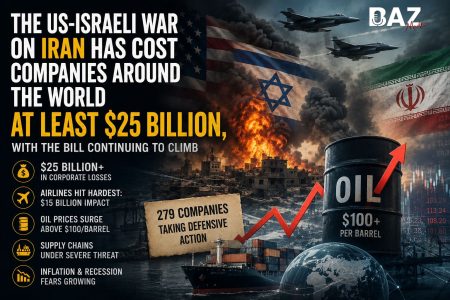
The economic shockwaves from the escalating US-Israeli war on Iran are now spreading far beyond the Middle East. What initially appeared to be a geopolitical and military confrontation has rapidly evolved into a global corporate crisis, with major companies already reporting more than $25 billion in combined losses, disruptions, and added costs.
From airlines and automakers to consumer goods giants and semiconductor suppliers, businesses worldwide are struggling with soaring oil prices, disrupted shipping lanes, inflation fears, and supply chain breakdowns. Analysts warn the true financial impact may only be beginning.
Key Takeaways
- Global companies have already reported $25 billion+ in war-related costs
- Nearly 279 companies have taken defensive actions, including price hikes and production cuts
- Airlines account for almost 60% of total losses
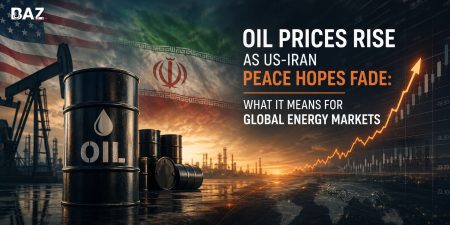
- Oil prices surged above $100 per barrel
- Supply chains linked to the Strait of Hormuz face severe disruption
- Inflation and recession fears are intensifying worldwide
Why the Iran Conflict Is Hurting the Global Economy
The biggest economic trigger behind the crisis is the disruption surrounding the Strait of Hormuz, one of the world’s most important energy shipping routes. Roughly 20% of global oil and natural gas shipments pass through this narrow corridor.
As tensions escalated, shipping insurers raised premiums dramatically, oil tankers faced delays, and markets reacted with panic buying. The result was an energy shock that quickly spread into transportation, manufacturing, logistics, and consumer pricing.
Oil prices jumped more than 50% compared to pre-war levels, pushing fuel costs to crisis-era highs and creating a ripple effect across virtually every major industry.
Airlines Have Taken the Hardest Hit
The aviation sector has emerged as the biggest corporate casualty so far.
Airlines are estimated to have absorbed nearly $15 billion in additional costs, accounting for roughly 60% of the total global corporate impact. Jet fuel prices nearly doubled in some regions, while canceled routes, rerouted flights, and security risks added further financial pressure.
Several Middle Eastern air corridors faced temporary closures, forcing airlines to operate longer routes that burned more fuel and reduced profitability.
Travel demand has also weakened as consumers cut discretionary spending amid growing inflation concerns.
Key Aviation Problems
- Jet fuel prices surged sharply
- Flight cancellations increased
- Airspace restrictions disrupted schedules
- Insurance costs rose significantly
- Tourism-dependent economies faced setbacks
The aviation crisis is now being compared by some executives to recession-level industry conditions similar to the aftermath of the 2008 financial crash.
Toyota Faces a Massive $4.3 Billion Blow
Japanese auto giant Toyota is among the biggest corporate victims of the crisis.
The company warned that rising material costs, shipping delays, and supply chain instability could result in a financial hit of approximately $4.3 billion.
Automakers rely heavily on global logistics networks and imported industrial materials, many of which are now facing delays or cost spikes due to Middle Eastern instability.
Why Automakers Are Struggling
- Steel and aluminum costs have surged
- Shipping routes face delays
- Consumer demand is weakening
- Semiconductor supply risks remain elevated
- Energy-intensive manufacturing costs more
Several other manufacturers are reportedly preparing similar warnings as the conflict continues.
Consumer Goods Companies Are Raising Prices
Global consumer brands are also under pressure.
Procter & Gamble estimated a post-tax financial impact of around $1 billion, largely due to rising packaging, plastic, transportation, and raw material costs.
Many companies are now warning consumers to expect additional price increases across:
- Household goods
- Packaged foods
- Personal care products
- Cleaning supplies
- Retail essentials
This is fueling concerns that the conflict could prolong global inflation into 2027.
Whirlpool Slashes Forecast as Demand Weakens
Appliance manufacturer Whirlpool Corporation sharply reduced its earnings forecast, cutting expectations nearly in half.
The company cited recession-like industry conditions, weaker consumer demand, and rapidly increasing operational costs.
Whirlpool also suspended dividends in an effort to preserve cash and manage debt during ongoing market uncertainty.
This reflects a broader trend: consumers worldwide are becoming more cautious with spending as energy and food prices rise.
The Strait of Hormuz Crisis Explained
The Strait of Hormuz has become one of the most important economic flashpoints in the world economy.
Any disruption in this region affects:
- Global oil shipments
- Natural gas exports
- Industrial raw materials
- Shipping insurance rates
- Maritime freight costs
Industries Most Exposed
| Industry | Main Risk |
| Airlines | Fuel prices |
| Manufacturing | Raw material shortages |
| Technology | Helium and chip supply disruptions |
| Agriculture | Fertilizer cost increases |
| Retail | Shipping inflation |
| Automotive | Logistics and metals costs |
Even limited disruptions can create global shortages because modern supply chains are deeply interconnected.
Raw Material Shortages Are Creating a Domino Effect
The war is not only affecting oil.
Several critical industrial materials are now facing shortages or price spikes:
Aluminum
Aluminum prices surged to multi-year highs due to shipping disruptions and supply uncertainty. Manufacturers across automotive, construction, and aerospace industries are feeling the impact.
Helium
Helium shortages are becoming a serious concern for semiconductor manufacturers. The gas is essential in chip production and has very limited substitutes.
Fertilizers
Fertilizer supply disruptions are pushing food production costs higher, especially in developing economies already struggling with inflation.
Sulfur
Nickel producers and industrial processors that depend on Middle Eastern sulfur exports now face major operational risks.
Inflation Fears Are Growing Worldwide
Economists warn the conflict could create a new wave of global inflation.
Energy prices influence nearly every sector of the economy, including transportation, manufacturing, agriculture, and retail. As costs rise, businesses often pass expenses directly to consumers.
Some analysts now fear inflation could exceed 6% in several economies if the conflict continues for an extended period.
Lower-income households are expected to suffer the most because fuel and food costs consume a larger share of household income.
How the Iran War Could Affect Pakistan
For countries like Pakistan, the economic consequences could become especially severe.
Pakistan depends heavily on imported fuel, and rising oil prices may increase:
- Petrol and diesel prices
- Electricity generation costs
- Transportation expenses
- Food inflation
- Trade deficits
A prolonged energy shock could also place additional pressure on the Pakistani rupee and increase borrowing challenges for the government.
Businesses in Pakistan that rely on imports may face higher operational costs in the coming months.
Global Supply Chains Are Being Rewritten
The crisis is accelerating a long-term shift away from excessive dependence on Middle Eastern energy routes.
Many corporations are now exploring:
- Alternative suppliers
- Regional manufacturing hubs
- Energy diversification
- Strategic reserves
- Shorter supply chains
This restructuring process could permanently reshape global trade patterns over the next decade.
What Consumers Should Expect Next
If the conflict continues, consumers around the world may soon experience:
Likely Price Increases
- Airline tickets
- Fuel prices
- Electronics
- Household appliances
- Groceries
- Consumer packaged goods
Possible Economic Trends
- Slower global growth
- Reduced consumer spending
- Higher inflation
- Corporate layoffs
- Supply shortages
The full economic impact has likely not yet materialized, meaning additional corporate warnings could emerge in upcoming quarterly earnings reports.
Expert Outlook: Could the Costs Rise Far Beyond $25 Billion?
Analysts believe the current $25 billion estimate may represent only the early phase of the economic fallout.
If energy disruptions continue and shipping instability worsens, the longer-term financial damage could become dramatically larger.
Historical comparisons show that prolonged geopolitical conflicts affecting energy markets often create multi-year inflationary and recessionary effects across the global economy.
The current situation is increasingly being viewed not only as a regional war, but as a major turning point for the global economic system.
Economists warn that prolonged conflict and energy disruptions could significantly slow global growth and increase recession risks.
Final Thoughts
The US-Israeli war on Iran is no longer only a geopolitical crisis; it is rapidly becoming one of the defining economic disruptions of 2026.
With global companies already facing more than $25 billion in costs, inflation pressures mounting, and energy markets under strain, businesses and consumers alike are entering a period of heightened uncertainty.
The next few months could determine whether this remains a temporary economic shock or evolves into a deeper global slowdown with long-lasting consequences.