
The world may be heading toward an extraordinary climate event. The UK Met Office is forecasting a potentially exceptionally strong El Niño in 2026-27, with sea-surface temperatures across the equatorial Pacific potentially rising more than 3°C above average. If the forecast develops as expected, the event could rank among the strongest El Niño episodes observed in modern records and could contribute to 2027 becoming the hottest year ever recorded.
While scientists emphasize that this remains a forecast rather than a confirmed record, the projected intensity has raised concerns about extreme weather, food security, water supplies, agriculture, and humanitarian risks around the world.
What Is El Niño?
El Niño is a naturally occurring climate pattern associated with unusually warm ocean temperatures in the central and eastern tropical Pacific Ocean. This warming can disrupt atmospheric circulation and influence weather patterns across continents.
A typical El Niño can affect rainfall, temperatures, storms, drought conditions, and ocean ecosystems. However, the 2026-27 El Niño forecast is attracting particular attention because some projections suggest that Pacific Ocean temperatures could exceed 3°C above normal.
The event is expected to strengthen through late 2026, with its potential peak between September and December 2026. The final intensity will depend on how ocean and atmospheric conditions evolve over the coming months.
Why Could the 2026-27 El Niño Be Unusual?
The projected strength is the key concern. Recent major El Niño events have already demonstrated how significantly the phenomenon can influence global temperatures and weather.
An El Niño exceeding 3°C above average would represent an exceptionally powerful warming of the tropical Pacific. Scientists are therefore monitoring ocean temperatures, atmospheric pressure, trade winds, and other indicators closely.
Importantly, El Niño does not simply make the entire world hotter. Its influence varies significantly by region. Some areas may experience extreme heat and drought, while others could see heavier rainfall, flooding, or stronger storms.
Could 2027 Become the Hottest Year on Record?
One of the most significant potential consequences is the impact on global temperatures.
El Niño releases additional heat from the Pacific Ocean into the atmosphere and can temporarily increase global average temperatures. When combined with the long-term warming trend caused by greenhouse gas emissions, a particularly strong El Niño could push global temperatures to exceptional levels.
If current forecasts materialize, 2027 could surpass 2024 as the hottest year on record.
However, this is still a projection. Weather and climate patterns can change, and the eventual strength of the El Niño event will determine how large its effect on global temperatures becomes.
Global Weather Impacts of a Strong El Niño
The potential effects of a powerful El Niño extend far beyond the Pacific Ocean.
Drought and Wildfire Risks
Australia, Indonesia, India, and parts of Southeast Asia can experience increased risks of drought, extreme heat, and wildfires during El Niño conditions.
Reduced rainfall can place additional pressure on agricultural production, reservoirs, forests, and local communities. In regions already experiencing water stress, even a moderate decline in rainfall can have serious consequences.
Heavy Rainfall and Flooding
El Niño can also increase rainfall in other parts of the world. Some regions of South America and areas around the western Pacific may experience significantly different precipitation patterns.
This creates a complicated global picture: one region may face severe drought while another experiences flooding.
Stormier Conditions in Europe
Parts of Europe, including the UK, could experience more unsettled conditions during autumn and winter. Forecasts indicate the possibility of wetter and stormier weather in some areas.
However, El Niño is only one factor influencing European weather, meaning its effects cannot be predicted in isolation.
El Niño and Global Food Security
Perhaps one of the biggest concerns is its potential impact on global food security.
Changes in rainfall and temperature can disrupt crop production, livestock conditions, fisheries, and food supply chains. The World Food Programme has warned that a strengthening El Niño could contribute to millions more people experiencing acute hunger, with consequences potentially extending into 2027 harvests.
Agricultural losses can also increase food prices, particularly in countries that depend heavily on climate-sensitive crops or imported food.
The combination of El Niño, extreme weather, inflation, and existing humanitarian crises could therefore create additional pressure on vulnerable communities.
What Could El Niño Mean for Pakistan?
Pakistan is among the countries that could face significant humanitarian and climate-related risks from the developing 2026-27 El Niño.
For Pakistan, potential concerns include water availability, agriculture, food prices, extreme heat, and irregular rainfall.
Parts of Southwest Asia could experience increased dryness, creating additional pressure on water resources and agricultural systems. Reduced rainfall could affect crops and reservoirs, while higher temperatures could increase water demand.
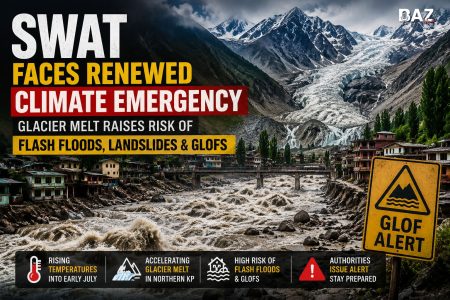
At the same time, a drier seasonal outlook does not eliminate the possibility of extreme rainfall events. Pakistan can still experience short-duration heavy rainfall, flash floods, and localized flooding even when seasonal rainfall totals are below normal.
This makes climate preparedness particularly important.
Why Climate Change Makes the Situation More Serious
El Niño is a natural climate phenomenon, but it is developing against a much warmer global climate.
Human-caused climate change has increased baseline temperatures, meaning an El Niño event now operates on top of an already warmer atmosphere and ocean system. As a result, the combination can amplify risks from heatwaves, droughts, wildfires, floods, and other extreme weather events.
This does not mean El Niño causes climate change. Instead, the two factors can interact and increase the likelihood of particularly intense climate impacts.
Why Governments Need to Prepare Now
The most important advantage is early warning.
Because the 2026-27 El Niño is being monitored months before its expected peak, governments and organizations have an opportunity to prepare. This could include protecting water supplies, adjusting agricultural planning, strengthening heat-health systems, preparing emergency services, monitoring food prices, and pre-positioning humanitarian supplies.
For Pakistan and other climate-vulnerable countries, early preparation could reduce the economic and humanitarian cost of extreme weather.
Final Thoughts
The developing 2026-27 El Niño could become one of the most powerful climate events in more than a century. If forecasts of Pacific warming above 3°C are realized, its effects could be felt across weather systems, agriculture, food security, water resources, and global temperatures.
The possibility of 2027 becoming the hottest year on record highlights how closely natural climate variability and long-term global warming are now interacting.
But the forecast is not yet a certainty. Scientists will continue monitoring the Pacific Ocean and atmospheric conditions as the event develops.
For governments, businesses, farmers, and communities, the message is clear: the time to prepare for potential climate extremes is before they arrive.