A Crisis That Didn’t Shake Oil Markets (As Expected)
The ongoing Strait of Hormuz oil market crisis has entered its third month, severely impacting one of the world’s most critical energy chokepoints. According to reporting traffic through the strait has fallen to nearly 15% of pre-conflict levels, marking one of the most significant supply disruptions in recent history.
The Scale of the Strait of Hormuz Disruption
The Strait of Hormuz remains one of the most strategically important maritime chokepoints in the world, handling a significant portion of global crude oil exports. The ongoing conflict has reduced shipping activity drastically, creating what many analysts call a “supply shock scenario.”
Hidden Oil Flows: The Rise of “Ghost Shipping”
One of the most significant stabilizing factors is the emergence of clandestine oil transportation routes.
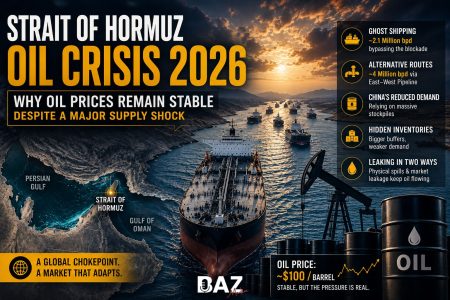
Roughly 2.1 million barrels per day are estimated to be moving through unofficial or untracked methods. These so-called “ghost vessels” disable tracking systems to bypass surveillance and continue transporting crude oil.
This underground network has effectively softened the impact of the blockade by ensuring that oil still reaches global markets even if through indirect and less transparent routes.
Alternative Export Routes Are Absorbing the Shock
Another major factor preventing price spikes is the increased use of alternative supply routes.
A significant volume of oil estimated at around 4 million barrels per day is now being rerouted through pipelines such as the East-West Pipeline system, exiting via ports in the Red Sea region.
This infrastructure allows producers to bypass the Strait of Hormuz entirely, reducing dependency on the compromised chokepoint.
As a result, global supply chains are not as restricted as initially assumed, helping stabilize crude oil markets.
China’s Strategic Demand Reduction and Stockpiling
China, one of the world’s largest oil importers, has also played a key role in stabilizing the market.
Instead of aggressively competing for disrupted supply, China has:
- Reduced short-term crude imports
- Increased reliance on strategic oil reserves
- Balanced domestic consumption with stored inventories
This deliberate demand management has reduced upward pressure on global prices.
In essence, one of the world’s largest buyers stepping back even temporarily has prevented a full-scale price shock.
Hidden Inventories and Underestimated Supply Buffers
Many countries and corporations maintain strategic reserves that are not fully visible in public data. These hidden stockpiles act as a buffer against supply disruptions.
At the same time, actual demand may be lower than forecasted due to:
- Slower industrial activity
- Efficiency improvements
- Regional economic adjustments
Together, these factors create a hidden cushion that absorbs shocks from supply disruptions.
Physical Leakage and Environmental Impact
The term “leaking” in this crisis has two meanings:
1. Environmental Leakage
A significant oil spill has been reported near key infrastructure zones, including areas close to Iran’s Kharg Island. Environmental monitoring suggests thousands of barrels may have escaped, creating a localized ecological risk.
2. Market Leakage
More importantly, oil is “leaking” through informal trade routes and unregulated shipping networks, ensuring supply continues despite blockades.
This dual-layer leakage system is one of the reasons the market has not experienced extreme shortages.
Why Oil Prices Haven’t Spiked as Expected
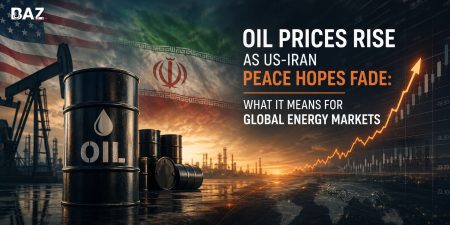
Despite the geopolitical instability, oil prices have remained around the $100 per barrel range, which is relatively stable considering the crisis scale.
Key reasons include:
- Diversified shipping routes
- Hidden supply chains
- Strategic stockpiles
- Reduced demand pressure
- Market anticipation and pricing in risk early
In other words, the market has already “priced in” much of the conflict risk long before it fully escalated.
What This Means for Global Energy Markets
The Strait of Hormuz crisis is reshaping how analysts view global oil security. Instead of a fragile system dependent on one chokepoint, the global oil market is proving to be:
- More adaptive
- More decentralized
- More resilient than expected
However, this resilience comes at a cost greater opacity, increased risk-taking in shipping, and environmental consequences from unregulated transport.
Conclusion: A Calm Market Built on Hidden Pressure
The Strait of Hormuz crisis demonstrates a paradox: even severe geopolitical disruptions do not always lead to immediate price shocks.
Instead, global oil markets are being stabilized by a combination of hidden flows, alternative infrastructure, strategic reserves, and demand-side adjustments.
While prices remain steady for now, the underlying system is under significant strain meaning future volatility is still very much possible.