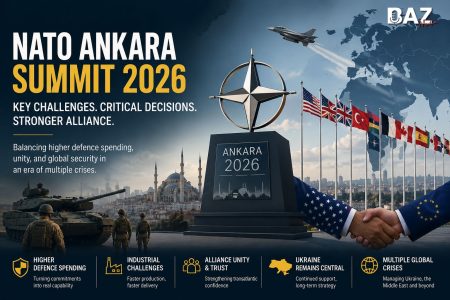
NATO Ankara Summit 2026: The Alliance Faces Its Biggest Strategic Test in Years
The NATO Ankara Summit 2026 arrives at a defining moment for the world’s largest military alliance. With Europe facing growing security concerns, the United States shifting strategic attention toward the Indo-Pacific, and ongoing conflicts in Ukraine and the Middle East, NATO leaders must address multiple challenges simultaneously.
While increased defence spending has become a major headline, the real question is whether member states can transform financial commitments into practical military capabilities. Beyond budgets, the summit will also test political unity, strategic coordination, and the alliance’s long-term ability to respond to an increasingly complex global security environment.
A New Security Balance Between Europe and the United States
One of the summit’s central discussions revolves around burden-sharing within the alliance.
For decades, the United States has remained NATO’s dominant military contributor. However, Washington increasingly expects European allies and Canada to assume greater responsibility for defending the European continent while the US allocates more resources toward the Indo-Pacific region.
This strategic shift does not signal a reduced US commitment to NATO. Instead, it reflects changing geopolitical priorities that require Europe to strengthen its own conventional defence capabilities.
As a result, European governments are under growing pressure to expand military investments, modernize armed forces, and improve operational readiness.
Higher Defence Spending Is Only the Beginning
Many NATO members are expected to announce larger defence budgets and additional military procurement agreements during the Ankara Summit.
However, increased spending alone cannot solve NATO’s immediate challenges.
One of the alliance’s biggest concerns is the slow pace of defence manufacturing. Modern military equipment including advanced aircraft, missile defence systems, armored vehicles, and ammunition often requires several years before delivery.
This creates a critical gap between political promises and actual military capability.
Even with record-breaking defence budgets, NATO cannot strengthen deterrence unless defence industries significantly increase production capacity and accelerate equipment delivery.
Military readiness depends not only on financial investment but also on efficient industrial production, logistics, workforce expansion, and supply chain resilience.
The Growing Importance of Transatlantic Unity
Another major issue confronting NATO is maintaining political trust among its members.
Relations between Europe and the United States have experienced increasing debate over defence responsibilities, strategic priorities, and long-term alliance planning.
While member states generally agree on strengthening NATO, differences remain regarding:
- Defence spending expectations
- Military leadership responsibilities
- Strategic priorities
- Long-term security planning
- Resource allocation
Political cohesion has always been NATO’s greatest strength.
Security experts argue that maintaining confidence between allies may be just as important as increasing military budgets. If political disagreements deepen, implementing ambitious initiatives such as higher defence investment targets or expanded military cooperation could become considerably more difficult.
Ukraine Remains Central to NATO’s Security Agenda
Despite several emerging global crises, Ukraine continues to occupy a central position in NATO’s strategic planning.
Russia’s ongoing military actions remain the alliance’s most significant long-term security concern across the Euro-Atlantic region.
NATO leaders are expected to reaffirm continued support for Ukraine through military assistance, training, intelligence cooperation, and long-term security planning.
At the same time, alliance members must carefully balance immediate assistance with maintaining their own defence readiness and rebuilding military stockpiles.
The outcome of the Ukraine conflict will continue shaping NATO’s defence policies for years to come.
The Middle East Adds Another Layer of Complexity
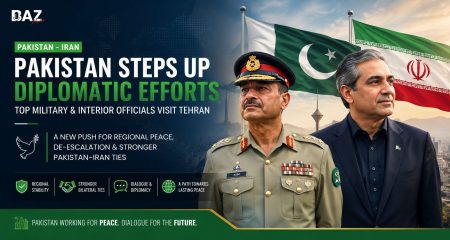
While Ukraine dominates European security discussions, developments involving Iran and the wider Middle East introduce additional uncertainty.
Escalating regional tensions could demand immediate diplomatic and military attention from several NATO members during the summit.
This creates a difficult balancing act.
Alliance leaders must ensure that new crises do not divert attention from long-term strategic priorities, particularly deterrence in Europe and continued support for Ukraine.
Managing multiple simultaneous security challenges has become one of NATO’s defining tests in today’s increasingly unpredictable international environment.
Can NATO Turn Strategy Into Action?
The Ankara Summit will ultimately be judged not by speeches or spending announcements but by measurable outcomes.
Analysts will closely monitor whether NATO presents practical solutions for:
- Accelerating defence manufacturing
- Reducing military procurement delays
- Improving force readiness
- Strengthening European defence capabilities
- Maintaining long-term US engagement
- Enhancing alliance coordination
- Responding effectively to multiple global crises
Delivering these objectives would demonstrate that NATO is adapting to evolving security realities rather than simply acknowledging them.
Why the Ankara Summit Matters
The NATO Ankara Summit 2026 represents more than another annual gathering of allied leaders.
It reflects a broader transformation in global security, where traditional military deterrence, industrial capacity, technological innovation, and political cooperation must work together.
The alliance faces an increasingly demanding environment characterized by prolonged conflict, geopolitical competition, supply chain challenges, and shifting strategic priorities.
Its success will depend not only on increasing defence budgets but also on converting financial commitments into deployable military capability while preserving the political unity that has remained NATO’s greatest strategic advantage for over seven decades.
If Ankara produces clear plans for faster military production, stronger European defence leadership, and continued transatlantic cooperation, the summit could mark an important step toward strengthening NATO for the future.
However, if announcements focus primarily on spending targets without addressing implementation challenges, questions about the alliance’s long-term preparedness are likely to persist.
Conclusion
As the NATO Ankara Summit 2026 unfolds, the alliance faces one of its most significant strategic moments since the end of the Cold War. Balancing Europe’s expanding defence role with sustained US commitment, maintaining unity amid global crises, and transforming defence investments into real military capability will determine NATO’s effectiveness in the years ahead.
The summit’s true success will not be measured by ambitious declarations alone but by the alliance’s ability to deliver faster military readiness, stronger industrial capacity, and lasting political cohesion in an increasingly uncertain world.